Business Name: BeeHive Homes Assisted Living
Address: 4702 Gulf Breeze Pkwy, Gulf Breeze, FL 32563
Phone: (850) 688-9919
BeeHive Homes Assisted Living
BeeHive Homes Assisted Living and memory care is located in beautiful Gulf Breeze, FL. BeeHive Homes of Gulf Breeze prestigious senior living offers the most grand elderly care in a residential setting.
4702 Gulf Breeze Pkwy, Gulf Breeze, FL 32563
Business Hours
Monday thru Sunday: Open 24 hours
Instagram: https://www.instagram.com/beehivegulfbreeze/
Facebook: https://www.facebook.com/BeehiveHomesofGB
Families hardly ever begin their look for senior care with a clear vocabulary. You feel something is altering in your parent or partner, you observe the missed out on medications, the burnt pan, the stories that repeat 3 times over dinner. Somebody recommends assisted living, another person says memory care, and all of a sudden the language itself feels like a test you never studied for.
Sorting out the distinction in between assisted living and memory care is not an abstract workout. It shapes security, self-respect, expense, and everyday lifestyle for an individual you like. After years of walking families through these choices and dealing with both types of communities, I have actually seen how the right match can support a declining scenario and how a poor fit can accelerate distress for everyone.
This article concentrates on that dividing line: what really makes memory care different, when it is required, and what families overlook when comparing options.
Why dementia modifications everything in senior care
Aging alone does not require specialized senior care. Arthritis, slower walking, or moderate forgetfulness frequently fit easily within the assistance model of basic assisted living. Dementia is various. It deteriorates not simply memory, but judgment, spatial awareness, impulse control, and sometimes personality.
I have seen capable professionals, retired instructors, engineers, nurses, begin to misread everyday situations. A range left on is no longer a little oversight, since the person does not acknowledge the threat even when revealed the issue. A stranger at the door might be welcomed in, because danger assessment has quietly slipped away. A front sidewalk ends up being an escape route, since the person makes certain their childhood home is just around the corner.
Senior look after dementia has to deal with three intertwined truths:
First, the person's abilities will alter in time, usually in a downward direction. What works for them in January might be unrealistic by December.
Second, they typically can not reliably advocate for their own requirements. A resident with heart disease might call their call button and say, "I feel off, please inspect me." A resident with moderate dementia may not recognize chest discomfort or may just say, "I am fine, leave me alone."
Third, dementia affects the care partner's life as much as the individual detected. Exhausted sons, burned-out spouses, and distressed adult children are part of every memory care story, even if they are not listed on the admission forms.
Any senior care environment can be kind. Not every environment is developed to manage this triad of developing needs, restricted self-advocacy, and caregiver strain. That is where the difference between assisted living and memory care becomes critical.
What assisted living normally offers
Assisted living was designed for older adults who need aid with daily jobs however stay generally oriented and able to make decisions. The objective is to offer support while maintaining as much independence as possible.
In most well-run assisted living neighborhoods, locals get aid with dressing, bathing, grooming, toileting, and medication management. Meals are supplied, housekeeping is dealt with, and there are often social and leisure activities throughout the day. Numerous locals utilize walkers or wheelchairs, but they can typically navigate with pointers and basic signage.
Staff training in assisted living focuses on basic elderly care: fall prevention, standard dementia awareness, safe transfers, infection control, and customer support. Nurses may be on-site for part of the day, with caregivers offering the majority of the hands-on support. Doors are generally not protected. Residents can stroll outside with ease, usage elevators, and even leave the building, depending on policies.
Most assisted living communities will accept homeowners with early-stage dementia or mild cognitive disability, particularly if the person is pleasant, cooperative, and not prone to roaming. At this phase, the individual might require medication reminders, some cueing with dressing, and reassurance when confused, but they can follow staff directions and understand fundamental safety boundaries.
Trouble starts when cognitive decrease relocations beyond this mild stage. The structure style, staffing patterns, and everyday routines in assisted living are not constructed around the intense supervision and repetition that moderate to sophisticated dementia often requires.

What memory care is constructed to do
Memory care communities are specifically developed for individuals dealing with Alzheimer's illness and other kinds of dementia, such as Lewy body dementia, frontotemporal dementia, and vascular dementia. In some cases memory care is a devoted "neighborhood" within a larger assisted living school. Other times, it is a stand-alone residence.
Several features identify memory care from standard assisted living in a significant way.
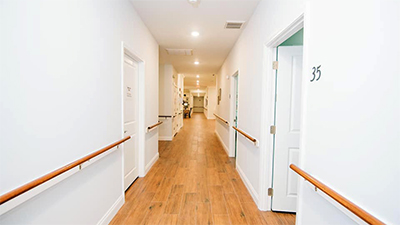
First, the environment is structured for security and orientation. Doors are protected, not to lock up citizens, but to avoid risky wandering into traffic or unknown neighborhoods. Corridors are generally brief and looped instead of long and complicated. Color cues, large-print signs, memory boxes by each door, and themed locations make it much easier for citizens to recognize their own rooms and browse the space.
Second, the staff training is much deeper and more specialized. Caregivers learn not just how to assist with bathing or toileting, however how to approach someone who is scared, how to reroute recurring questions without shaming, and how to handle habits like sundowning, resistance to care, or allegations. Good memory care workers understand that what looks like "agitation" is often discomfort, dullness, or overstimulation in disguise.
Third, daily life is created around cognitive ability. Activities are not merely bingo and film night layered on top of a regular schedule. Instead, they are simplified, repetitive in an excellent way, and often multi-sensory: folding towels, stirring cookie dough, sorting cards, singing familiar tunes, strolling in the garden. The goal shifts from "keeping hectic" to "preserving function and psychological wellness."
Fourth, medical and behavioral oversight tends to be better. Memory care typically has greater staffing ratios and more regular nurse involvement. Some communities partner with geriatricians, neurologists, or psychiatric nurse professionals who understand dementia-related habits and can change medications appropriately.
In short, memory care is not just assisted living with a locked door. When it works well, it is an entire ecosystem model constructed for people whose brains process the world differently.
Key distinctions: assisted living vs memory care
Families typically request a side-by-side comparison. While policies vary by state and private buildings vary, the most consistent practical differences generally fall under these areas:
Security and roaming management: Assisted living normally has open or lightly kept an eye on doors. Memory care utilizes protected entries, alarmed exits, and confined outdoor spaces to prevent hazardous wandering and elopement.
Staffing and training: Assisted living staff receive standard dementia training, but often look after a mixed population. Memory care personnel are trained thoroughly in dementia interaction, behavioral assistance, and non-pharmacologic soothing techniques, and they serve a population where almost everybody has cognitive impairment.
Environment and routines: Assisted living layouts are more like homes or hotels. Memory care layouts are compact, recurring, and cue-rich, with foreseeable daily routines that lower anxiety.
Activities and sensory input: Assisted living activities focus on entertainment and optional engagement. Memory care activities are therapeutic by design, with careful attention to tiredness, overstimulation, and the maintained abilities of individuals at different dementia stages.
When assisted living is not enough
It prevails for an individual with dementia to move first into assisted living, then later into memory care. The turning point typically comes not from a medical diagnosis on paper, however from patterns in life that become hazardous or unmanageable.
Based on what I have observed, numerous warnings suggest that standard assisted living might no longer be the ideal environment.
Frequent roaming or exit-seeking, especially in the evening, is a major concern. If your parent is actively trying to leave the building, believes they need to "go home," or has actually already been found outside without supervision, the fairly open structure of assisted living ends up being risky. Some communities attempt to manage this with door alarms or closer observation, but they are not configured to view every exit continuously.
Escalating habits are another tipping point. Repetitive physical aggression, intense spoken outbursts, going into other residents' rooms at night, and sexually disinhibited habits put both the individual and others at risk. Assisted living personnel, currently stretched thin, may do not have the time and tools to de-escalate these scenarios consistently.
Declining capability to follow guidelines and participate in care also matters. If a resident declines showers since they do not understand what is happening, fights medication administration, or ends up being frightened during transfers, caregivers require specialized dementia strategies and more time per person. Memory care is staffed for that; assisted living generally is not.
Finally, recurrent hospitalizations or injuries connected to confusion signal that the environment may not be fulfilling the cognitive needs. A resident who repeatedly falls while attempting to "go to work" or who becomes delirious whenever there is a small change in routine might support substantially in a quieter, more structured memory care setting.
Families in some cases feel guilty about moving from assisted living to memory care, as if this action represents a failure. In practice, it often avoids crises, preserves relationships, and permits visits to go back to something closer to household time rather of continuous supervision.
Cost, contracts, and the hidden math of memory care
Money shapes every senior care decision, even when families do not want it to. Memory care often costs more than assisted living. That distinction reflects greater staffing ratios, more extensive training, increased security steps, and in some cases specialized programming.
Pricing structures vary. Some neighborhoods charge a flat rate for memory care, while others have a base rate plus level-of-care add-ons. For instance, there might be one cost for someone who needs very little aid, and a higher price for substantial help or complex behaviors. In practice, a lot of homeowners with moderate dementia wind up in the center or higher tiers.
Insurance protection is restricted. Standard Medicare does not pay room and board in assisted living or memory care, though it does cover medical services provided there, such as physical therapy, lab work, or physician visits. Long-term care insurance plan, if the person has one, might pay part of the bill, however advantages and limits vary wildly.
Medicaid can often help, depending on the state and the specific center. Some memory care units accept Medicaid after a private-pay duration, others are private-pay just. It is important to ask in-depth questions about what occurs when a resident's funds dwindle.
I motivate families to believe not only about regular monthly cost, but about the longer arc. A somewhat more costly memory care home that prevents duplicated hospitalizations and keeps a spouse healthy enough to continue working a few more years can be the more cost-effective option in the long run. On the other hand, moving into high-cost memory care too early, when assisted living or in-home elderly care would suffice, can needlessly drain pipes savings.
The "right" answer often lies in an honest evaluation of current dangers, the expected trajectory of the illness, household capability for hands-on assistance, and financial endurance over 5 to ten years.
The function of respite care in dementia journeys
One of the most underused tools in dementia-focused senior care is respite care. Respite care indicates short-term stays, usually from a few days to a few weeks, in an assisted living or memory care setting. It can likewise refer to in-home support that offers household caretakers a break.
Respite care serves several purposes simultaneously. It allows a partner, partner, or adult kid to rest, attend a wedding, have surgical treatment, or simply sleep through the night for a week. It likewise gives experts a possibility to observe the individual with dementia in a structured environment and tweak care strategies.
I have actually seen households use respite stays in memory care to "test-drive" a neighborhood before an irreversible relocation. This can be particularly valuable when a loved one is resistant to the concept of moving. A time-limited trial, framed as a stay "while your house is being fixed" or "while I recuperate from my operation," sometimes gets more buy-in. Throughout that time, staff construct relationship and regimens that make any later transition smoother.
Respite care is not available all over, and not every resident is a good suitable for short stays, particularly if changes set off extreme distress. However for lots of caretakers, arranged respite every couple of months can postpone the requirement for full-time residential placement and maintain the emotional bond with their loved one.
How to tell if a memory care home is genuinely high quality
Not all memory care communities live up to the promise of dementia-focused care. The building may have secured doors and an indication that states "memory support," however the day-to-day reality still looks like generic assisted living.
A couple of observations tend to separate strong programs from weak ones.
Watch the staff, not the paint. Do caretakers welcome locals by name and respond rapidly to distress, or do they cluster at the nurse's station with their backs to the hall? When somebody screams or duplicates the exact same question, do personnel rush to silence them, or do they kneel, make eye contact, and redirect?
Listen to how people speak about citizens. In a healthy culture, staff refer to homeowners as people: "Mr. Jones likes music after lunch" or "Maria gets anxious around 4 pm, so we walk with her." In a stretched environment, you hear phrases like "wanderers," "feeders," or "habits" instead dementia care of names.
Look for real engagement, not simply television. A television running all the time in the common room is a warning. In excellent memory care homes, you see little groups doing easy tasks, individually discussions, music, hand massages, and personalized techniques. Not every moment will be structured, however the ratio of passive sitting to significant contact should favor the latter.
Pay attention to sensory overwhelm. Loud overhead paging, roaring televisions, extreme fluorescent lights, and continuous alarms are exhausting for people with dementia. Better environments utilize soft lighting, simple decor, and peaceful alert systems. Odors matter too: relentless strong smells of urine or heavy air freshener recommend deeper problems.
Ask direct questions about staff ratios, training, and turnover. Numbers alone do not guarantee quality, but a pattern of quick turnover, minimal dementia education, or frequent use of company personnel should make you cautious.
Questions to ask when exploring memory care
To relocation beyond sales brochures and scripted trips, bring a list of concrete concerns. The answers, and how staff respond, often reveal more than sleek marketing.
How do you be familiar with each resident's history, and how is that info utilized in day-to-day care? What is your common staffing ratio on days, evenings, and overnights, and how typically are nurses physically on-site? How do you deal with behaviors like exit-seeking, refusal of care, or aggression without relying too greatly on sedating medications? Can you explain a current emergency situation or challenging scenario and how your group responded? What support do you use households, such as education, support groups, or regular care conferences?If the individual giving the tour seems anxious with these concerns or offers unclear, protective answers, take note. A strong memory care program is normally proud to share its technique in concrete detail.
Balancing security, autonomy, and identity
One of the hardest psychological stress in dementia-focused elderly care is the compromise in between safety and autonomy. Memory care frequently represents a loss of flexibility, at least from the resident's point of view: doors that do closed freely, less unaccompanied outings, more people involved in intimate tasks.
Families can minimize the sting of this shift by focusing not just on what is restricted, but on what is maintained and in some cases gained back. An individual who was formerly isolated at home, with a damaged caretaker hovering anxiously, might find brand-new friendship in a small group of peers, a predictable everyday rhythm, and staff who are not yet exhausted.
The secret is to protect the individual's identity as much as their body. That suggests generating familiar objects and routines: the worn cardigan they always reach for, the music they enjoy, the morning coffee routine, the photo of their pet. It implies sharing stories with personnel, not simply detects: the job they held for thirty years, the way they took pride in their garden, the family jokes that still make them smile.
Families who remain closely involved, visit at various times of day, and team up with staff rather than only directing them, generally see better results. At its finest, memory care is a partnership in between specialists and relatives, each holding part of the person's history and present reality.
Making a choice you can live with
There is no perfect time to move a loved one into memory care. Many households either wait longer than professionals would suggest or move under pressure after a crisis. Yet even in untidy scenarios, thoughtful choices are possible.
Start by acknowledging the full picture: the person's present and most likely future needs, your own capability and limitations, the monetary landscape, and the readily available choices in your area. A frank discussion with your loved one's main physician, a geriatric care manager, or a social worker can assist ground your thinking.
Then appearance beyond labels. An "assisted living with memory assistance" wing might work like robust memory care. A stand-alone memory care building may feel institutional and rigid. Tour, observe, ask pointed concerns, and listen to your own instincts.
Finally, allow room for change. The first weeks are often bumpy, for residents and families alike. Regimens shift, medications might require tweaks, and emotions rise. In time, patterns settle. Lots of family members who were taken in by hands-on caregiving uncover their function as child, son, or spouse again, able to visit without continuously scanning for danger.
The distinction between assisted living and memory care is not simply technical lingo within senior care. It is a useful tool that, used well, can line up support with the real needs of an individual living with dementia and individuals who enjoy them. When safety, self-respect, and identity are offered equal weight, memory care homes can offer not just security, however a measure of peace in a very difficult chapter of life.
BeeHive Homes Assisted Living provides assisted living care
BeeHive Homes Assisted Living provides memory care services
BeeHive Homes Assisted Living provides respite care services
BeeHive Homes Assisted Living supports assistance with bathing and grooming
BeeHive Homes Assisted Living offers private bedrooms with private bathrooms
BeeHive Homes Assisted Living provides medication monitoring and documentation
BeeHive Homes Assisted Living serves dietitian-approved meals
BeeHive Homes Assisted Living provides housekeeping services
BeeHive Homes Assisted Living provides laundry services
BeeHive Homes Assisted Living offers community dining and social engagement activities
BeeHive Homes Assisted Living features life enrichment activities
BeeHive Homes Assisted Living supports personal care assistance during meals and daily routines
BeeHive Homes Assisted Living promotes frequent physical and mental exercise opportunities
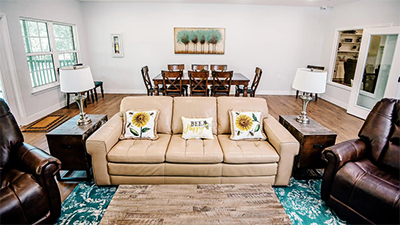
BeeHive Homes Assisted Living provides a home-like residential environment
BeeHive Homes Assisted Living creates customized care plans as residents’ needs change
BeeHive Homes Assisted Living assesses individual resident care needs
BeeHive Homes Assisted Living accepts private pay and long-term care insurance
BeeHive Homes Assisted Living assists qualified veterans with Aid and Attendance benefits
BeeHive Homes Assisted Living encourages meaningful resident-to-staff relationships
BeeHive Homes Assisted Living delivers compassionate, attentive senior care focused on dignity and comfort
BeeHive Homes Assisted Living has a phone number of (850) 688-9919
BeeHive Homes Assisted Living has an address of 4702 Gulf Breeze Pkwy, Gulf Breeze, FL 32563
BeeHive Homes Assisted Living has a website https://beehivehomes.com/locations/gulf-breeze/
BeeHive Homes Assisted Living has Google Maps listing https://maps.app.goo.gl/9y6zbmVhjY1AMgfE8
BeeHive Homes Assisted Living has Instagram page https://www.instagram.com/beehivegulfbreeze/
BeeHive Homes Assisted Living has an YouTube page https://www.youtube.com/@WelcomeHomeBeeHiveHomes
BeeHive Homes Assisted Living won Top Assisted Living Homes 2025
BeeHive Homes Assisted Living earned Best Customer Service Award 2024
BeeHive Homes Assisted Living placed 1st for Senior Living Communities 2025
People Also Ask about BeeHive Homes Assisted Living
What is BeeHive Homes Assisted Living monthly room rate in Gulf Breeze, FL?
The rate depends on the level of care that is needed. We do an initial evaluation for each potential resident to determine the level of care needed. The monthly rate is based on this evaluation. There are no hidden costs or fees. We are a private-pay home and can help you work with your Long Term Care (LTC) Insurance if applicable
Can residents stay in BeeHive Homes until the end of their life?
Usually yes. There are exceptions, such as when there are safety issues with the resident, or they need 24 hour skilled nursing services
Do we have a nurse on staff?
No, but each BeeHive Home has a consulting Nurse available 24 – 7. if nursing services are needed, a doctor can order home health to come into the home
What are BeeHive Homes’ visiting hours?
Visiting hours are adjusted to accommodate the families and the resident’s needs… just not too early or too late
Do we have couple’s rooms available?
Yes, each home has rooms designed to accommodate couples. Please ask about the availability of these rooms
Where is BeeHive Homes Assisted Living located?
BeeHive Homes of Gulf Breeze is conveniently located at 4702 Gulf Breeze Pkwy, Gulf Breeze, FL 32563. You can easily find directions on Google Maps or call at (850) 688-9919 Monday through Sunday Open 24 hours
How can I contact BeeHive Homes Assisted Living?
You can contact BeeHive Homes of Gulf Breeze by phone at: (850) 688-9919, visit their website at https://beehivehomes.com/locations/gulf-breeze/ or connect on social media via Instagram or Facebook
Conveniently located near BeeHive Homes Assisted Living The Breeze Cinema 8 a great movie theater with full food & drink menu. Catch a movie and enjoy some great food while you wait.